

The strategic implementation of high-performance acoustic solutions within modern open-plan office environments has transitioned from a secondary interior design consideration to a mission-critical investment for global enterprises seeking to maximize human capital productivity and employee well-being. In the contemporary corporate landscape, the architectural shift toward expansive, wall-free floor plates—characterized by hard surfaces like polished concrete, floor-to-ceiling glass, and exposed industrial ceilings—has created a significant auditory crisis where excessive reverberation and intrusive speech noise directly contribute to cognitive fatigue and a measurable decline in task accuracy.
For the discerning facility manager and the institutional real estate developer, the challenge lies in deploying a multi-layered acoustic strategy that absorbs, blocks, and covers sound without compromising the aesthetic transparency and collaborative energy that open offices were originally designed to foster. This process involves the meticulous selection of high-Noise Reduction Coefficient (NRC) materials and the strategic placement of Sound Transmission Class (STC) rated barriers that interrupt the path of sound waves across the floor plate. By integrating advanced vibrational damping technologies and active sound masking systems, organizations can create “acoustic zones” that allow for a harmonious coexistence between high-energy collaborative hubs and serene, focused work sanctuaries.
Furthermore, the economic implications of poor acoustics are profound, as the constant distraction of ambient noise is statistically linked to increased stress hormones and higher rates of absenteeism among high-value knowledge workers. As we move toward a more human-centric model of commercial real estate, the mastery of sound control has become a primary differentiator for “Class A” office spaces, offering a tangible competitive advantage in attracting and retaining top-tier talent who prioritize psychological comfort.
This comprehensive exploration into the mechanics of office acoustics will detail the technical integration of suspended baffles, the utility of acoustic furniture, and the role of digital sound masking in creating a resilient and high-yielding professional environment. Ultimately, investing in premier acoustic infrastructure is not merely about noise reduction; it is about securing a legacy of operational excellence and ensuring that the built environment serves as a powerful catalyst for professional flourishing.
A. High NRC Suspended Acoustic Ceiling Baffles

Suspended ceiling baffles represent one of the most effective methods for controlling sound in offices with exposed structural ceilings. These vertical panels are engineered with high-density mineral wool or recycled polyester felt to capture sound waves before they can bounce off hard overhead surfaces.
By increasing the surface area of absorptive material without a full dropped ceiling, designers can maintain an industrial aesthetic while achieving superior speech clarity. The spacing and orientation of these baffles can be tuned to the specific frequency range of human conversation for maximum efficiency.
B. Strategic Deployment Of Active Sound Masking
Active sound masking systems utilize a network of hidden speakers to emit a continuous, low-level background sound specifically tuned to the frequency of human speech. This “white noise” or “pink noise” effectively fills in the silent gaps of an office, making distant conversations unintelligible and less distracting.
This technology is essential for open-plan layouts where physical barriers are minimal. It provides a layer of “auditory privacy” that allows employees to focus on their work without being forced to overhear every phone call or meeting happening nearby.
C. Sound Transmission Class Rated Glass Partitions
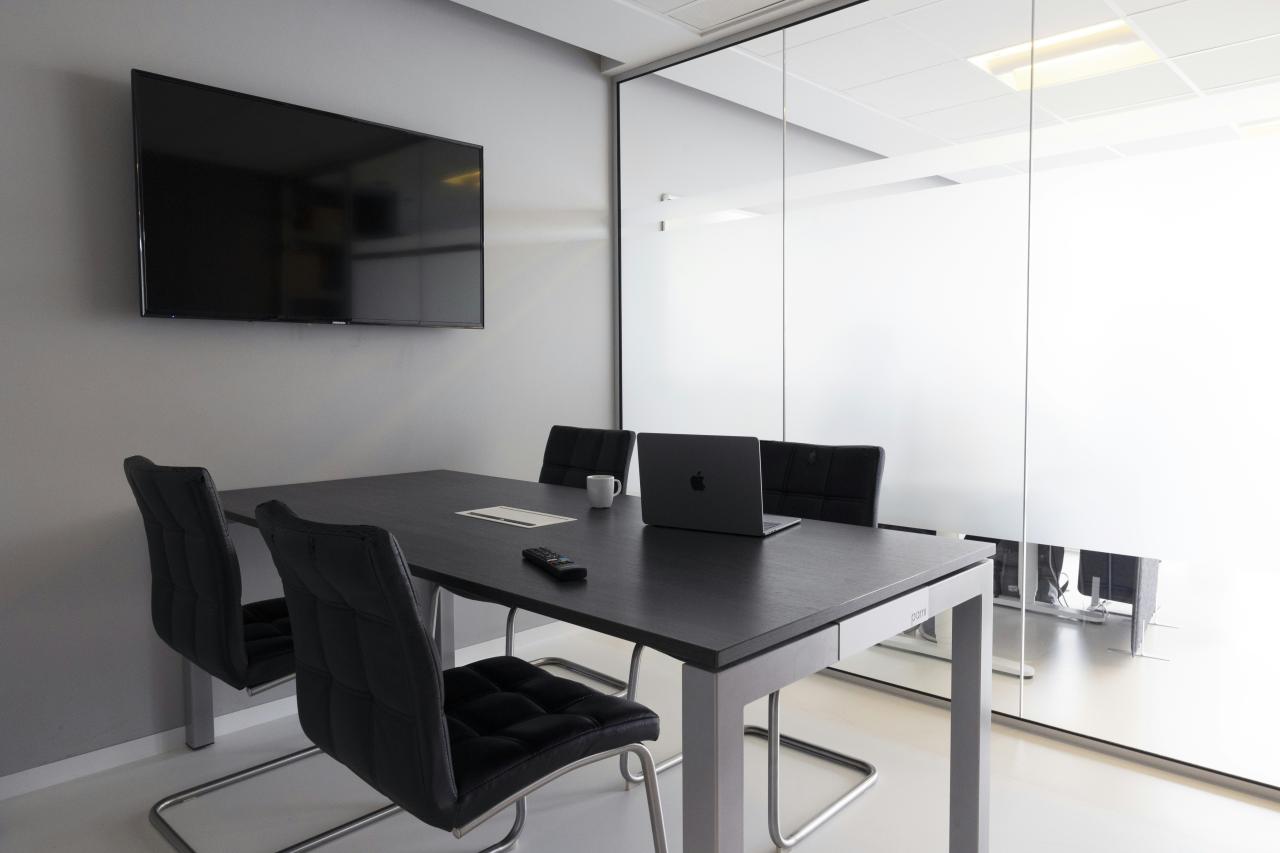
For meeting rooms and executive pods within an open floor plan, STC-rated glass partitions provide the necessary visual transparency while maintaining high levels of sound isolation. These systems often utilize laminated glass with an acoustic interlayer that disrupts the vibration of sound through the pane.
Double-glazed units with varied glass thicknesses are particularly effective at blocking a wide range of frequencies. This ensures that sensitive discussions remain confidential while the office still feels open, bright, and connected.
D. Acoustic Furniture And Collaborative Privacy Pods
The rise of “furniture-as-infrastructure” has led to the development of high-backed sofas and acoustic felt booths that act as localized sound absorbers. These pieces are designed to create a “cocoon” effect, providing a quiet place for informal meetings or private phone calls.
Integrating these modular units across the floor plate allows for quick reconfigurations as the team’s needs change. They serve as functional art pieces that soften the hard lines of the office while performing a critical technical role in noise management.
E. Micro Perforated Wall Panels And Art Installations
To combat lateral sound reflections, designers are increasingly using micro-perforated wood or metal panels that look like solid surfaces but contain thousands of tiny holes to trap sound. These panels can be customized with digital prints or textures to serve as decorative wall art.
Behind the perforations, an acoustic fleece or mineral wool core absorbs the energy of the sound waves. This is a premier solution for boardrooms and lobbies where traditional foam absorbers would be aesthetically unacceptable.
F. Low Profile Acoustic Flooring And Underlayments
While many offices prefer polished concrete, the use of high-performance acoustic carpet tiles with specialized cushion backing can significantly reduce impact noise from footsteps. For areas where hard flooring is required, luxury vinyl tiles (LVT) with integrated acoustic underlayments offer a quieter alternative.
Reducing the “click-clack” of movement across the floor is vital for maintaining a peaceful work atmosphere. Proper flooring selection is the first line of defense in the “ABCD” of acoustics: Absorb, Block, Cover, and Diffuse.
G. Vibrational Damping For Mechanical Systems
HVAC units and plumbing pipes can be major sources of low-frequency hums and vibrations that travel through the building’s structure. Strategic use of spring isolators and flexible duct connectors prevents these vibrations from turning the walls into giant speakers.
This “invisible” acoustic treatment is often overlooked but is essential for achieving a high-end, quiet environment. Ensuring the mechanical systems are silent allows the other acoustic elements to work much more effectively.
H. Biophilic Sound Buffering With Living Walls
Large-scale indoor plant installations and living walls act as natural sound diffusers and absorbers. The complex geometry of leaves and the porous nature of the soil substrate help to scatter and dampen sound waves across a wide area.
Beyond their acoustic benefits, these green features improve air quality and employee morale. They are a multi-sensory solution that aligns perfectly with the current trends in sustainable and wellness-focused office design.
I. Digital Acoustic Modeling And Site Mapping
Before a single panel is installed, acoustic consultants use sophisticated software to create a digital twin of the office space. This allows them to simulate how sound will travel and identify potential “hot spots” of noise concentration.
By modeling different scenarios, developers can optimize the placement of acoustic treatments to achieve the best results with the least amount of material. This data-driven approach ensures a guaranteed return on the acoustic infrastructure investment.
J. Sound Diffusers For Even Auditory Distribution
In high-end media rooms or conference halls, diffusers are used to scatter sound waves in many directions rather than absorbing them. This prevents “dead spots” and creates a more natural, lively acoustic environment that feels spacious rather than muffled.
Diffusers are often crafted from high-quality hardwoods and feature mathematical patterns that are visually striking. They are the hallmark of a professionally tuned room where sound quality is treated with the same reverence as lighting or furniture.
K. Integrated Acoustic Lighting Fixtures
One of the most innovative trends is the combination of high-efficiency LED lighting with acoustic felt shades or housings. These dual-purpose fixtures provide necessary task lighting while simultaneously absorbing sound from the most critical area: directly above the workstation.
This integration reduces ceiling clutter and simplifies the installation process. It is an elegant solution for designers who want to maximize performance in a minimalist or high-concept interior.
L. Fabric Wrapped Tacet Systems For Executive Suites
Tacet or fabric-wrapped wall systems provide a seamless, high-end finish that can turn an entire wall into a massive acoustic absorber. These systems use a hidden track to stretch custom fabrics over a thick layer of acoustic core material.
This allows for a perfectly smooth surface that can be color-matched to any interior palette. It is the preferred choice for executive suites and high-stakes presentation rooms where both luxury and silence are non-negotiable.
M. Acoustic Privacy And The Human Factor
Acoustic solutions are not just about materials; they are also about managing human behavior through spatial planning. Placing “loud” zones like kitchens and game rooms far away from “quiet” zones like libraries is a fundamental planning strategy.
Providing visual cues, such as change in lighting or flooring texture, can subtly signal to employees that they are entering a “low-decibel” area. This behavioral design reduces the need for heavy-handed enforcement of office etiquette.
N. Sustainable Material Sourcing And Circularity
The market is shifting toward acoustic products made from recycled content, such as PET felt derived from plastic bottles. These materials are not only highly effective but also support the company’s ESG (Environmental, Social, and Governance) goals.
Choosing recyclable and low-VOC (Volatile Organic Compound) acoustic materials ensures a healthy indoor environment for the staff. Sustainability in acoustics is a key part of achieving LEED or WELL building certifications.
O. Impact On Employee Focus And Task Accuracy
Scientific studies have consistently shown that employees in acoustically optimized environments are more accurate and productive. By reducing the “cognitive load” required to filter out background noise, the brain can dedicate more energy to the task at hand.
This increase in efficiency directly impacts the company’s bottom line. Investing in acoustics is a strategic move to unlock the full potential of a high-salaried workforce.
P. Custom Acoustic Branding And Graphics
Advanced manufacturing techniques allow acoustic panels to be custom-cut into brand logos or printed with high-resolution company graphics. This turns a functional necessity into a powerful branding opportunity.
Acoustic treatments can be used to tell a company’s story or reinforce its identity through color and texture. It is a creative way to ensure that the office feels unique and personalized to the organization.
Q. Thermal Insulation Benefits Of Acoustic Media
Many of the porous materials used for sound absorption, such as mineral wool and felt, also possess excellent thermal insulation properties. This means that acoustic wall treatments can help maintain a more stable indoor temperature.
This secondary benefit leads to reduced heating and cooling costs over time. It is another example of how high-performance acoustic infrastructure contributes to the overall sustainability of the building.
R. Retrofitting Legacy Spaces For Modern Standards
Many older office buildings were not designed with modern open-plan acoustics in mind. Retrofitting these spaces with “plug-and-play” acoustic elements like hanging clouds or wall-mounted tiles can breathe new life into an outdated asset.
This allows property owners to compete with new developments without a full structural renovation. Acoustic upgrades are one of the most cost-effective ways to increase the “Class A” appeal of a commercial property.
S. The Role Of AI In Dynamic Sound Management
Emerging technologies are introducing AI-controlled sound masking that can adjust its volume and frequency in real-time based on the actual noise levels in the office. If the office becomes suddenly louder during a team lunch, the masking system gently compensates.
This dynamic response ensures that the acoustic environment is always optimal, regardless of how the space is being used. It represents the future of “intelligent” architecture that adapts to human needs.
T. Long Term Value And Asset Appreciation
Commercial real estate assets that feature superior acoustic performance command higher lease rates and have lower tenant turnover. Quality acoustics are a tangible marker of a “premium” workspace that is built for professional success.
As the global workforce becomes more discerning about their work environment, silence and focus will become the ultimate luxuries. A strategically tuned office is a future-proofed asset in any economic climate.
Conclusion

High-performance acoustics are the foundation of a productive and healthy open office environment. Investing in these systems ensures that the workspace supports both collaboration and deep focus. The reduction of auditory distractions leads to measurable improvements in employee performance and accuracy. Modern acoustic materials allow for a perfect balance between technical function and high-end design.
Strategic sound masking provides the necessary privacy in expansive, wall-free floor plates. Sustainability is enhanced through the use of recycled and energy-efficient acoustic components. The long-term value of the real estate asset is bolstered by superior environmental quality. Choosing the right acoustic infrastructure is a critical move for any forward-thinking global enterprise.

